
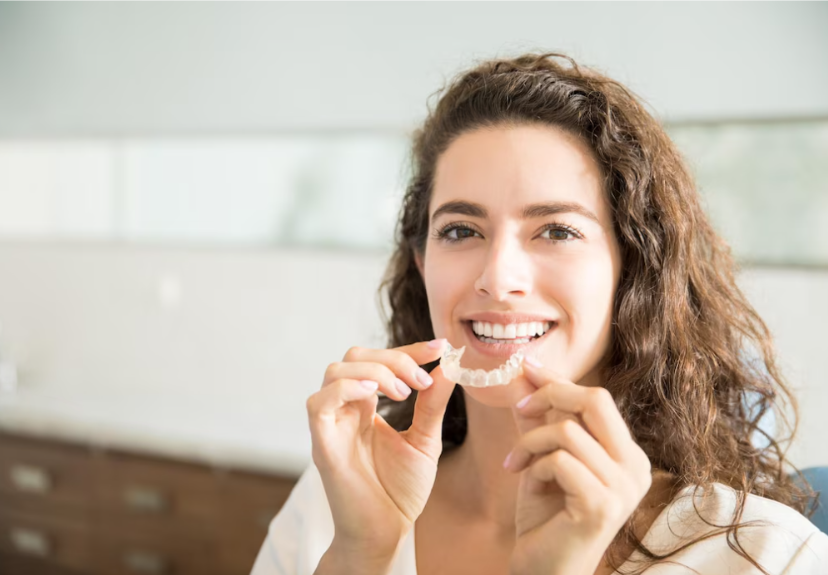
Invisalign treatment options in Battersea refer to the range of clear aligner systems available through qualified dental providers in the area that gradually straighten teeth using a series of custom-made, virtually invisible removable trays instead of traditional fixed metal braces. Invisalign is one of the most popular and clinically proven orthodontic solutions available today because it combines effective tooth movement with a level of discretion and comfort that traditional braces cannot match. If you are considering straightening your teeth and want to find a trusted Dental Clinic in Battersea that offers the full range of Invisalign options with the expertise to deliver excellent results, understanding what each treatment tier involves is the most important first step.
The demand for Invisalign in Battersea has grown significantly in recent years as more adults and older teenagers have recognized that orthodontic treatment does not have to mean years of visible metal brackets and wires. Clear aligner therapy allows patients to straighten their teeth while continuing to eat normally, maintain their oral hygiene routine without obstruction, and go through their daily personal and professional lives without the self-consciousness that traditional braces can sometimes create. For residents seeking comprehensive Dental Care in Battersea that includes advanced orthodontic solutions tailored to individual needs, Invisalign represents one of the most versatile and patient-friendly options available.
What Is Invisalign and How Does It Work
Invisalign is a proprietary clear aligner system that uses a series of custom-fabricated transparent plastic trays to apply controlled and precise forces to the teeth, gradually moving them into the planned final positions over the course of the treatment. Each aligner in the series is worn for approximately one to two weeks before being replaced by the next tray in the sequence, with each successive tray moving the teeth incrementally closer to the desired alignment.
The Invisalign system uses a proprietary thermoplastic material called SmartTrack that is specifically engineered to apply consistent, gentle force to the teeth while maintaining a comfortable and snug fit throughout the wear period. The treatment plan is designed using advanced three-dimensional digital imaging software called ClinCheck that allows both the dentist and the patient to preview the anticipated tooth movements and the expected final result before treatment begins.
A qualified Dentist in Battersea who is trained and certified in Invisalign treatment will assess your teeth, take digital scans or impressions, and develop a fully customized treatment plan that addresses your specific alignment concerns within a realistic timeline. The number of aligners in your series and the total treatment duration depend on the complexity of your case and the extent of tooth movement required.
Battersea Dental Practice is one of the best dental clinics in Battersea, providing the full range of Invisalign treatment options to patients who want to achieve a straighter, healthier smile with a comfortable and discreet orthodontic solution. Located at 33A Queenstown Rd, London SW8 3RE, United Kingdom, the clinic is reachable at +44 20 7622 5322 or batterseadentalpractice@gmail.com to schedule a consultation and discuss which Invisalign option is the right fit for your smile goals and lifestyle.
For patients who want to explore the complete range of clear aligner solutions available, Invisalign Treatment Options in Battersea at Battersea Dental Practice are delivered by experienced and certified dental professionals who combine clinical precision with a genuinely patient-centered approach to orthodontic care.
The Different Invisalign Treatment Options Available
One of the most significant advantages of the Invisalign system is that it is not a single one-size-fits-all product. It encompasses a range of treatment tiers that are specifically designed to address different levels of complexity and the distinct needs of different patient groups.
Invisalign Comprehensive
Invisalign Comprehensive is the most complete treatment option available within the Invisalign system and is designed to address the full range of mild to complex orthodontic cases. It includes an unlimited number of aligners and refinement stages within the treatment period, making it the appropriate choice for patients with significant crowding, spacing, overbites, underbites, crossbites, or open bites that require more extensive and prolonged tooth movement to resolve.
Comprehensive treatment is suitable for both adults and teenagers and provides the greatest degree of flexibility for complex cases where the treatment plan may need to be adjusted and refined as tooth movement progresses. It is the most thorough Invisalign option and delivers the most significant results for patients whose alignment concerns go beyond the mild or moderate range.
Invisalign Lite
Invisalign Lite is a shorter and more focused version of the Comprehensive treatment that is designed for patients with mild to moderate alignment concerns that can be addressed with a more limited number of aligners. It is a popular choice for patients who have previously had orthodontic treatment and have experienced some relapse in their tooth positions, and for those whose concerns are primarily cosmetic and limited to the front teeth that are most visible when smiling.
The treatment timeline for Invisalign Lite is typically shorter than Comprehensive treatment, making it an efficient and accessible option for patients who want a meaningful improvement in their smile alignment without committing to an extended full orthodontic treatment.
Invisalign Go
Invisalign Go is a streamlined version of the Invisalign system specifically designed for general dental practitioners to offer to their patients for mild cosmetic alignment corrections. It focuses exclusively on the anterior teeth, which are the visible front teeth of the upper and lower dental arches, and uses a limited set of aligners to address mild crowding, small gaps, and minor irregularities in the front teeth.
Invisalign Go is not appropriate for patients with significant bite issues or concerns affecting the back teeth. It is best suited for patients who have generally well-aligned teeth with minor cosmetic imperfections that they want to correct quickly and discreetly.
Invisalign Teen
Invisalign Teen is a version of the Invisalign system specifically designed to meet the orthodontic needs and lifestyle considerations of teenage patients. It includes several features that are not present in the adult Invisalign options, including compliance indicators that allow parents and dental providers to confirm that the aligners are being worn for the recommended daily duration, and replacement aligners for lost or damaged trays, which are a more common occurrence in younger patients.
Invisalign Teen also incorporates eruption tabs that accommodate the continued eruption of permanent teeth during the treatment period, making it clinically appropriate for patients whose dentition is not yet fully mature. It addresses the same range of conditions as Comprehensive treatment, but with modifications that reflect the practical realities of teenage life.
Signs That Invisalign May Be Right for You
Invisalign is a versatile orthodontic solution that can address a wide range of alignment concerns. Here are the most common situations in which Invisalign treatment is particularly well-suited to a patient’s needs.
- You have crowded teeth, where there is insufficient space in the dental arch for all teeth to sit in correct alignment
- You have gaps or spaces between teeth caused by missing teeth, small teeth relative to the jaw size, or habits such as thumb sucking in childhood
- Your upper front teeth protrude significantly beyond the lower teeth, creating an overbite that affects both appearance and bite function
- Your lower teeth sit in front of the upper teeth when biting, creating an underbite
- The upper teeth sit inside the lower teeth on one or both sides of the mouth, creating a crossbite
- Your upper and lower front teeth do not touch when biting together, creating an open bite
- You have previously had orthodontic treatment, and your teeth have relapsed from their corrected positions
- You want to improve the appearance and alignment of your smile, but are unwilling or unable to wear visible metal braces due to professional or personal reasons
Invisalign vs Traditional Braces: A Clear Comparison
Many patients considering orthodontic treatment want to understand the key differences between Invisalign and traditional fixed braces before making a decision. Here is a straightforward comparison of the two approaches.
Invisalign aligners are virtually invisible when worn, making them significantly more discreet than metal or even ceramic braces. They are removable, which means patients can eat any food without restriction, brush and floss normally without working around brackets and wires, and remove the aligners for important occasions if needed. The smooth plastic material of Invisalign aligners is generally more comfortable against the cheeks and lips than the metal components of traditional braces.
Traditional fixed braces are permanently attached to the teeth throughout treatment, which means they work continuously without relying on patient compliance to wear them. This can be an advantage for patients who are concerned about their ability to maintain the 20 to 22 hours per day wear requirement of Invisalign. Fixed braces are also the standard recommendation for very complex orthodontic cases involving significant skeletal discrepancies or highly complex tooth movements that push the boundaries of what clear aligner therapy can reliably achieve.
For the majority of patients with mild to moderate orthodontic concerns, Invisalign delivers results that are comparable to traditional braces in terms of the quality and stability of the final alignment, with the significant advantage of being far more comfortable and discreet throughout the treatment period.
Step-by-Step: The Invisalign Treatment Process
Understanding the complete Invisalign journey from the first consultation to the retention phase helps patients know exactly what to expect at each stage of their treatment.
Step 1: Initial Consultation and Assessment Your Invisalign journey begins with a comprehensive consultation during which your dental provider examines your teeth, assesses your bite, and discusses your smile goals and concerns. Photographs, dental X-rays, and digital scans or impressions of your teeth are taken to provide the full clinical information needed to develop your personalized treatment plan.
Step 2: Digital Treatment Planning With ClinCheck Using the digital records taken at your assessment, your dental provider develops a three-dimensional ClinCheck treatment plan that maps out the precise movement of each tooth throughout the aligner series. You will be shown a digital preview of your anticipated tooth movements and the expected final result before any aligners are fabricated, giving you a clear visual understanding of what the treatment will achieve.
Step 3: Fabrication of Your Custom Aligners Once the treatment plan is approved, your complete series of custom aligners is fabricated by Invisalign’s specialist manufacturing facility and delivered to your dental practice. Each aligner is individually numbered and labeled to ensure they are worn in the correct sequence.
Step 4: Fitting of Attachments if Required Many Invisalign cases require small tooth-colored composite attachments to be bonded to certain teeth before treatment begins. These attachments act as anchors that allow the aligners to apply the specific forces needed to achieve particular tooth movements that would not be possible through aligner pressure alone. Attachments are matched to your tooth shade and are virtually invisible during treatment.
Step 5: Wearing Your Aligners You will wear each aligner in your series for the period specified by your dental provider, typically one to two weeks, removing them only to eat, drink anything other than water, and to brush and floss your teeth. Maintaining the recommended 20 to 22 hours of daily wear is the most critical factor in achieving the planned tooth movements on schedule.
Step 6: Regular Progress Appointments You will attend appointments with your dental provider at intervals of approximately six to eight weeks throughout your treatment. These appointments allow the provider to assess your progress, ensure that the tooth movements are tracking as planned, and address any fit or comfort concerns with the aligners.
Step 7: Refinements if Required For some patients, additional refinement aligners are prescribed during or after the main aligner series to fine-tune the final positions of specific teeth. Refinements are a normal and expected part of many Invisalign treatments rather than a sign that something has gone wrong.
Step 8: Retention Once the active aligner phase of treatment is complete, retainers are provided to maintain the corrected tooth positions and prevent relapse. Retention is a permanent commitment and is arguably the most important phase of any orthodontic treatment because teeth have a natural tendency to drift back toward their original positions without ongoing support from a retainer.
Common Patient Mistakes With Invisalign Treatment
Being aware of the most common mistakes Invisalign patients make helps you avoid them and get the most effective result from your treatment investment.
Not Wearing Aligners for the Required Daily Duration: The single most common and impactful mistake Invisalign patients make is not wearing their aligners for the recommended 20 to 22 hours per day. Every hour that the aligners are not in the mouth is an hour during which no tooth movement is occurring, and the teeth may begin to drift back. Patients who consistently under-wear their aligners will find that subsequent aligners do not fit correctly because the teeth have not moved as planned, requiring additional refinements and extending the overall treatment timeline.
Eating and Drinking With Aligners In: Eating with Invisalign aligners in place can distort the aligner shape, stain the clear plastic, and trap food particles between the aligner and the tooth surface where they contribute to decay. Only plain water should be consumed while aligners are in. All food and drinks other than water should be consumed with aligners removed.
Not Cleaning Aligners Properly: Aligners that are not cleaned regularly become cloudy, discolored, and harbor bacteria that can cause bad breath and increase the risk of tooth decay. Aligners should be cleaned gently with a soft toothbrush and cool water every time they are removed. Hot water should never be used as it can distort the thermoplastic material.
Skipping Retainer Wear After Treatment: Many patients complete their active aligner treatment and then gradually stop wearing their retainers because their teeth look great and they no longer feel the urgency of consistent compliance. Teeth without retainer support will begin to shift within months of the active treatment ending. Wearing retainers as directed by your dental provider is a lifelong commitment that protects the investment of your Invisalign treatment.
Moving to the Next Aligner Too Quickly: Some patients move to the next aligner in their series before the recommended wear period because they are eager to progress through treatment quickly. Each aligner is designed to achieve a specific increment of tooth movement that requires the full recommended wear time to complete. Advancing too quickly means teeth are not in the planned position when the next aligner is placed, which compromises the fit and the effectiveness of subsequent aligners.
Prevention and Maintenance Tips for Invisalign Patients
Caring for both your aligners and your teeth properly throughout Invisalign treatment ensures the best possible outcome and protects your oral health during the process.
- Brush your teeth thoroughly after every meal before reinserting your aligners to prevent food particles and bacteria from being trapped against the tooth surfaces
- Store your aligners in the protective case provided whenever they are out of your mouth to prevent loss, damage, and exposure to bacteria
- Clean your aligners every morning and evening as part of your oral hygiene routine using a soft brush and cool water or the Invisalign cleaning crystals recommended by your provider
- Carry your aligner case with you at all times so that you never need to wrap aligners in a napkin or leave them exposed on a table, which are the two most common ways aligners are lost or damaged
- Attend all scheduled progress appointments so your dental provider can confirm that your treatment is tracking as planned and address any concerns early
- Begin wearing each new aligner at night so that any initial tightness is experienced during sleep, when it is less disruptive to daily life
- Avoid chewing gum, as it sticks to aligners and is difficult to remove without damaging the tray
- Keep your retainers clean and wear them consistently after your active treatment is complete to protect your final result permanently
Frequently Asked Questions
- How long does Invisalign treatment take? The duration of Invisalign treatment varies considerably depending on the complexity of the alignment concerns being addressed and the specific Invisalign product being used. Simple cases treated with Invisalign Lite or Invisalign Go may be completed in as little as three to six months. More complex cases treated with Invisalign Comprehensive typically take between twelve and eighteen months, with some particularly complex cases requiring up to two years. Your dental provider will give you a realistic estimate of your specific treatment timeline during your initial consultation based on the ClinCheck simulation of your individual tooth movements.
- Is Invisalign painful? Invisalign treatment is generally described as more comfortable than traditional fixed braces, but it is not entirely without discomfort. Most patients experience some pressure and mild soreness for the first one to three days after fitting each new aligner as the teeth begin to respond to the new forces being applied. This discomfort typically resolves on its own without medication within a few days and becomes less noticeable as patients progress through their aligner series and become accustomed to the sensation. Over-the-counter pain relief can be used during the initial days of a new aligner if needed.
- Will Invisalign affect my speech? Most patients experience a slight and temporary change in their speech during the first few days of wearing Invisalign aligners as the tongue and lips adapt to the presence of the aligner material in the mouth. This typically resolves within a week as the patient becomes accustomed to wearing the aligners. Reading aloud and speaking regularly in the first few days of treatment helps the tongue and lips adapt more quickly. The temporary speech effect of Invisalign is generally far less noticeable to listeners than it feels to the wearer.
- Can Invisalign fix my bite as well as straighten my teeth? Yes, Invisalign Comprehensive is designed to address a range of bite issues including overbites, underbites, crossbites, and open bites in addition to crowding and spacing concerns. The ability to correct bite problems depends on the severity of the discrepancy and whether it is dental in origin, meaning it is caused by the positions of the teeth, or skeletal in origin, meaning it is caused by differences in the positions of the jaw bones themselves. Skeletal discrepancies may require jaw surgery in addition to orthodontic treatment to fully resolve. Your dental provider will assess whether your bite concern falls within the range that Invisalign can reliably address during your consultation.
- What happens if I lose or damage an aligner? If an aligner is lost or damaged, you should contact your dental provider as soon as possible. Depending on where you are in your treatment sequence, your provider may recommend inserting the previous aligner to maintain the current tooth position while a replacement is arranged, or advancing to the next aligner in the series if you are close to the end of your current wear period. Replacement aligners can be ordered from Invisalign, though there may be a delay before the replacement arrives. This is why keeping your previous aligner rather than discarding it is always a sensible precaution throughout treatment.
Conclusion
Invisalign treatment options in Battersea provide patients with access to one of the most effective, discreet, and comfortable orthodontic solutions available, with a range of treatment tiers that can address everything from minor cosmetic corrections to comprehensive bite and alignment concerns. Choosing a certified and experienced provider, committing to the daily wear requirements, and maintaining consistent retainer use after treatment are the three pillars of an Invisalign result that is both beautiful and lasting. Battersea Dental Practice, located at 33A Queenstown Rd, London SW8 3RE, United Kingdom, is one of the most trusted dental clinics in Battersea, providing expert Invisalign treatment and comprehensive orthodontic care to patients across the community. To book your consultation, contact the team at batterseadentalpractice@gmail.com or call +44 20 7622 5322.