
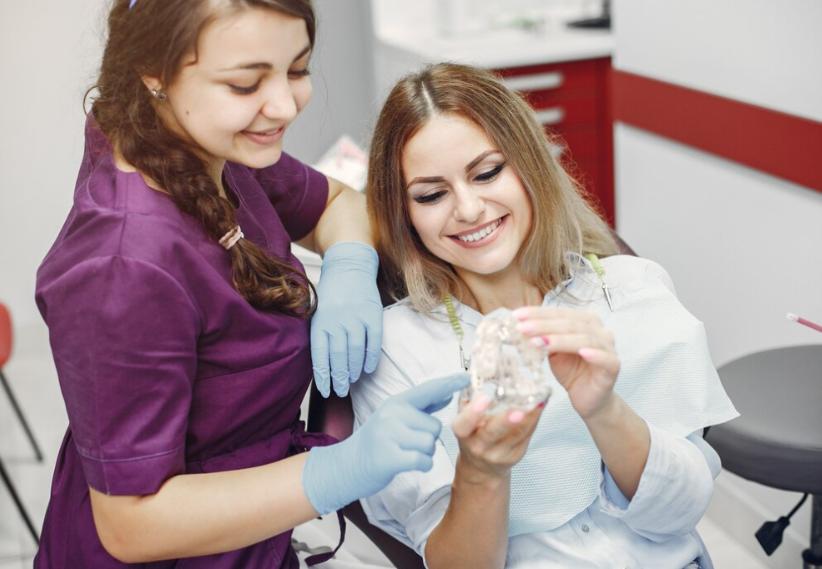
Invisalign vs traditional braces is one of the most common comparisons patients make when considering orthodontic treatment, and the honest answer is that neither option is universally superior. The right choice depends on the specific alignment concerns being treated, the patient’s lifestyle and personal preferences, their age, and the recommendation of a qualified dental professional who has assessed their individual clinical situation. If you are weighing your options and want guidance from a trusted Dental Clinic in Battersea that provides both Invisalign and traditional orthodontic solutions, understanding the genuine differences between the two approaches is the most valuable starting point for making a well-informed decision.
Both Invisalign and traditional braces have a long track record of successfully straightening teeth and correcting bite problems, and both have been the subject of extensive clinical research confirming their effectiveness. The differences between them lie primarily in the patient experience during treatment, the range of cases each can address most effectively, the level of compliance required, and the aesthetic impact on daily life throughout the treatment period. For residents seeking the highest standard of Dental Care in Battersea that includes a thorough assessment of all available orthodontic options tailored to their specific needs, understanding these differences in depth is the foundation of a confident treatment decision.
What Is Invisalign
Invisalign is a clear aligner orthodontic system that uses a series of custom-fabricated, virtually invisible removable trays made from a smooth thermoplastic material to move the teeth gradually into the planned final positions. Each aligner in the series applies precisely calculated forces to specific teeth, moving them in controlled increments. Patients wear each aligner for approximately one to two weeks before advancing to the next tray in the sequence, with the teeth moving progressively closer to the desired alignment throughout the treatment.
The Invisalign system uses advanced three-dimensional digital planning software to map out the complete sequence of tooth movements from the current position to the final goal, allowing both the patient and the dental provider to preview the anticipated result before any aligners are fabricated. A certified Dentist in Battersea who offers Invisalign will assess the patient’s suitability for clear aligner treatment and develop a fully personalized plan that addresses their specific alignment and bite concerns within a realistic timeline.
Battersea Dental Practice is one of the best dental clinics in Battersea, providing both Invisalign and traditional orthodontic treatments to patients who want to achieve straighter, healthier smiles with care and expertise. Located at 33A Queenstown Rd, London SW8 3RE, United Kingdom, the practice is reachable at +44 20 7622 5322 or batterseadentalpractice@gmail.com to discuss your orthodontic options and schedule a comprehensive consultation.
For patients specifically interested in learning more about the clear aligner option before their consultation, Invisalign Treatment Options in Battersea at Battersea Dental Practice covers the full range of Invisalign products available and the conditions each is best suited to address.
What Are Traditional Braces
Traditional braces are fixed orthodontic appliances that are permanently attached to the tooth surfaces throughout the treatment period. They consist of metal or ceramic brackets bonded to each tooth, connected by an archwire that runs through each bracket and is held in place with small elastic ligatures. The archwire exerts continuous pressure on the teeth, and the orthodontist or dentist adjusts this pressure at regular appointments by changing the wire or adjusting the tension to guide the teeth progressively toward the planned final positions.
Traditional braces are the longest-established orthodontic treatment available and have the most extensive clinical evidence base of any orthodontic system. They are effective across the widest range of orthodontic complexity, including severe crowding, significant bite discrepancies, and cases involving significant rotations or vertical movements of the teeth that push the boundaries of what clear aligner therapy can predictably achieve.
Key Differences Between Invisalign and Traditional Braces
Understanding the most meaningful practical differences between these two orthodontic systems helps patients make a decision that is genuinely aligned with both their clinical needs and their lifestyle preferences.
Appearance During Treatment
This is the most frequently cited difference between the two systems and the primary reason that many adult patients choose Invisalign over traditional braces. Invisalign aligners are made from a clear thermoplastic material that is virtually invisible when worn, making them extremely discreet in professional and social situations. Most people will not notice that an Invisalign patient is undergoing orthodontic treatment unless they look closely.
Traditional metal braces are visible and immediately apparent. While ceramic braces, which use tooth-colored brackets instead of metal ones, offer a more discreet alternative to standard metal braces, they are still significantly more visible than clear aligners, and the archwire connecting the brackets remains metallic in most cases.
For patients whose primary concern is the impact of orthodontic treatment on their professional image or social confidence, Invisalign has a clear and significant advantage in this comparison.
Comfort During Treatment
Invisalign aligners are made from smooth plastic with no sharp edges or protruding components, which means they cause minimal irritation to the soft tissues of the cheeks, lips, and tongue. Patients typically experience some pressure and mild soreness when a new aligner is first placed, but this resolves within a few days as the teeth begin to respond to the aligner forces.
Traditional braces involve metal brackets and archwires that can cause significant irritation to the inside of the cheeks and lips, particularly in the first weeks of treatment and after adjustment appointments when new wires are placed. Orthodontic wax can be used to cover sharp or irritating bracket or wire components, but the potential for soft tissue irritation is an ongoing feature of fixed brace treatment rather than a temporary adjustment period.
For patients with particularly sensitive soft tissues or those who are concerned about ongoing comfort during treatment, Invisalign generally provides a more comfortable day-to-day experience.
Removability and Lifestyle Impact
Invisalign aligners are removable, which has both advantages and responsibilities. The primary lifestyle advantage is the ability to eat and drink without restriction, as aligners are removed for all meals and drinks other than plain water. This means Invisalign patients can continue to enjoy all foods throughout treatment without the dietary restrictions that fixed braces impose.
Traditional braces require significant dietary modifications throughout treatment. Hard, crunchy, and sticky foods must be avoided to prevent bracket debonding and wire damage. Patients with braces must cut food into small pieces and eat carefully at every meal for the entire treatment duration.
The removability of Invisalign also allows for a completely unobstructed oral hygiene routine. Invisalign patients brush and floss normally after removing their aligners, with no need to navigate brackets and wires. Maintaining good oral hygiene with fixed braces requires additional tools, including interdental brushes, floss threaders, and water flossers to clean around and beneath the braces components effectively.
Treatment Compliance Requirements
The removability of Invisalign is also its most significant behavioral challenge. Aligners must be worn for 20 to 22 hours per day to achieve the planned tooth movements on schedule. Patients who consistently under-wear their aligners will experience slower progress, poorly fitting subsequent aligners, and the need for additional refinement stages that extend the treatment timeline.
Traditional fixed braces require no compliance from the patient in terms of wear time because they are permanently attached to the teeth and work continuously. This makes them the more reliable choice for patients who are honest with themselves about their likelihood of maintaining consistent aligner wear, or for younger patients whose compliance cannot be fully guaranteed.
Range of Cases Treatable
Traditional braces are capable of addressing the full spectrum of orthodontic complexity, from mild crowding and spacing to highly complex bite corrections and significant skeletal discrepancies when combined with orthopedic appliances or jaw surgery. The ability to apply highly specific forces to individual teeth in multiple directions simultaneously gives fixed braces a clinical versatility that clear aligner systems are still working to match fully.
Invisalign has expanded its clinical capabilities significantly over the years and is now capable of treating a wide range of mild to complex cases that would previously have been considered outside the scope of clear aligner therapy. However, some very complex cases, particularly those involving significant vertical tooth movements, severe rotations of round-shaped teeth, or significant skeletal discrepancies, may still be more reliably and predictably treated with traditional braces.
Treatment Duration
Treatment duration with both systems varies considerably depending on the complexity of the individual case. For similar levels of complexity, the total treatment timeline is generally comparable between Invisalign and traditional braces. Mild to moderate cases treated with either system typically take between six and eighteen months. Complex cases may take eighteen months to two years or longer with either approach.
The key variable with Invisalign is the impact of patient compliance on duration. Patients who wear their aligners consistently for the recommended daily hours and advance through the aligner series on schedule will complete treatment within the projected timeframe. Patients who under-wear their aligners will experience a longer treatment duration due to the need for additional refinements.
Who Is the Better Candidate for Invisalign
Invisalign is most appropriate for the following patient profiles.
- Adults and older teenagers who are responsible and motivated to maintain consistent aligner wear
- Patients with mild to moderately complex alignment and bite concerns that fall within the clinical capabilities of the Invisalign system
- Patients who work in professional environments where visible orthodontic appliances would affect their confidence or professional image
- Patients with a history of soft tissue sensitivity or irritation from dental appliances who would benefit from the smooth, bracket-free experience of clear aligners
- Patients who play wind instruments or contact sports and need the flexibility to remove their orthodontic appliance during those activities
- Patients who have previously had orthodontic treatment and are experiencing mild relapse that requires correction
Who Is the Better Candidate for Traditional Braces
Traditional braces are most appropriate for the following patient profiles.
- Patients with complex or severe orthodontic concerns that are at or beyond the boundaries of what clear aligner therapy can predictably treat
- Younger patients, including children and early teenagers, whose compliance with removable aligner wear cannot be reliably maintained
- Patients who are concerned about their ability to commit to the 20 to 22 hours daily wear requirement of Invisalign
- Cases involving significant rotations, significant vertical tooth movements, or skeletal discrepancies that require the precise force control of fixed appliances
- Patients who are being treated in coordination with jaw surgery require very specific and controlled tooth movements in relation to the surgical plan
Common Mistakes Patients Make When Choosing Between the Two
Understanding the most common decision-making mistakes helps patients approach the choice between Invisalign and traditional braces more effectively.
Choosing Based on Aesthetics Alone Without Clinical Assessment: Some patients decide they want Invisalign before having a clinical assessment to confirm whether their case is suitable for clear aligner treatment. Aesthetics are a legitimate and important consideration, but the orthodontic system chosen must also be the one that is most clinically appropriate for the specific concerns being addressed. A thorough clinical assessment is always the essential first step before committing to either treatment.
Underestimating the Compliance Commitment of Invisalign: Many patients choose Invisalign without fully appreciating what 20 to 22 hours of daily wear means in practice. Aligners can only be removed for eating, drinking anything other than water, and brushing and flossing. Every additional hour they are out of the mouth delays progress. Patients who choose Invisalign should be genuinely honest with themselves about whether they will maintain this level of compliance consistently throughout treatment.
Assuming Traditional Braces Are Only for Children: Many adults dismiss traditional braces as a treatment for children and teenagers without giving them serious consideration, even in cases where fixed braces would deliver a more predictable result than clear aligners. Modern ceramic braces are significantly more discreet than metal braces and are a clinically excellent option for many adult patients with complex concerns.
Not Discussing Retention Plans Before Starting Treatment: Some patients begin orthodontic treatment without understanding that retention after treatment is a permanent commitment, regardless of which orthodontic system is used. Teeth will shift without ongoing retainer support after either Invisalign or traditional braces. Discussing the retention plan and its requirements before starting treatment helps patients understand the full commitment they are making.
Prevention and Maintenance Tips for Both Treatment Options
Caring for your oral health and your orthodontic appliance properly throughout treatment protects both the effectiveness of the treatment and the health of your teeth and gums.
For Invisalign patients, clean aligners every morning and evening with a soft brush and cool water, remove aligners for all food and drinks other than water, store aligners in their protective case when not in use, brush teeth after every meal before reinserting aligners, and keep previous aligners as a backup in case a current aligner is lost or damaged.
For traditional brace patients, use an interdental brush and floss threader daily to clean around and beneath brackets and wires, rinse with water after every meal to clear food debris from around the brackets, avoid hard, crunchy, and sticky foods throughout treatment, attend all scheduled adjustment appointments without delay, and use orthodontic wax on any sharp or irritating bracket or wire components.
For all orthodontic patients, attend regular dental checkups and professional cleanings throughout treatment, wear your retainers consistently after treatment is complete, and communicate any concerns or discomfort to your dental provider promptly rather than waiting for the next scheduled appointment.
Frequently Asked Questions
- Is Invisalign as effective as traditional braces for straightening teeth?
- For mild to moderate orthodontic concerns, Invisalign is clinically effective and produces results that are comparable to traditional braces in terms of the quality of the final alignment when the aligners are worn consistently for the recommended daily duration. For complex cases involving severe crowding, significant bite discrepancies, or highly specific tooth movements, traditional braces may offer more predictable results due to their ability to apply precise and continuous forces to every tooth simultaneously. The most accurate answer to whether Invisalign will be as effective as braces for a specific patient depends on a thorough clinical assessment of that patient’s individual case.
- Can Invisalign fix an overbite or underbite?
- Yes, Invisalign Comprehensive is designed to address a range of bite issues, including overbites, underbites, crossbites, and open bites. The ability to fully correct a bite issue with Invisalign depends on whether the problem is dental in origin, meaning it is caused by the positions of the teeth, or skeletal in origin, meaning it is caused by differences in the jaw positions themselves. Dental bite problems can often be effectively addressed with Invisalign. Skeletal problems may require jaw surgery in addition to orthodontic treatment for full correction. Your dental provider will assess the origin and severity of your bite concern during your consultation.
- Which option is better for teenagers?
- Both Invisalign Teen and traditional braces are appropriate options for teenage patients, with the better choice depending on the individual teenager’s orthodontic needs and personal responsibility level. Invisalign Teen includes compliance indicators and replacement aligner provisions that address some of the practical challenges of the teenage lifestyle. Traditional braces are often the more reliable choice for teenagers who are unlikely to maintain consistent aligner wear or whose cases are complex enough to benefit from the full clinical capabilities of fixed appliances. A discussion between the dental provider, the patient, and their parents is the best way to determine which option is most appropriate.
- How do I maintain oral hygiene during orthodontic treatment?
- Oral hygiene during Invisalign treatment is generally straightforward because the aligners are removed for brushing and flossing, allowing the teeth to be cleaned in exactly the same way as before treatment. Aligners should also be cleaned each time they are removed to prevent bacterial buildup on the plastic. Oral hygiene during traditional brace treatment requires more effort and specific tools. An interdental brush is needed to clean between and beneath the brackets and archwires, a floss threader is needed to guide floss beneath the wire for interdental cleaning, and a water flosser can be a very effective supplementary tool for clearing debris from around the brace components.
- Will orthodontic treatment with either option be painful?
- Both Invisalign and traditional braces involve some degree of discomfort during the tooth movement process, but the nature and intensity of that discomfort differs between the two systems. Invisalign patients typically experience mild pressure and soreness for the first one to three days after inserting a new aligner, which then resolves as the teeth adjust to the new tray. Traditional brace patients experience soreness after each adjustment appointment when new wires are placed, which can last for two to four days. Traditional braces also carry the additional discomfort of potential soft tissue irritation from brackets and wires throughout treatment. In general, Invisalign is considered the more comfortable of the two options for most patients, though individual experiences vary.
Conclusion
Invisalign and traditional braces are both effective and clinically proven orthodontic solutions, and the right choice between them depends on the specific alignment concerns being treated, the patient’s lifestyle preferences, their compliance with removable appliance wear, and the clinical assessment of a qualified dental professional. Understanding the genuine differences in appearance, comfort, lifestyle impact, and clinical scope helps patients approach this decision with clarity and confidence. Battersea Dental Practice, located at 33A Queenstown Rd, London SW8 3RE, United Kingdom, is one of the most trusted dental clinics in Battersea, providing comprehensive orthodontic consultations and both Invisalign and traditional brace treatments to patients seeking a straighter, healthier smile. To schedule your consultation and discuss which option is right for you, contact the team at batterseadentalpractice@gmail.com or call +44 20 7622 5322.