
The best teeth whitening options in Battersea are professional treatments provided by qualified dental practitioners that use clinically proven bleaching agents to safely and effectively lighten the natural colour of the tooth enamel, delivering results that over-the-counter products simply cannot replicate in terms of consistency, safety, and the degree of brightness achieved. Teeth whitening is one of the most popular cosmetic dental treatments available today because it delivers a visible and immediate improvement to the appearance of the smile with minimal intervention and no alteration to the natural tooth structure. If you are considering whitening your smile and want guidance from a trusted Dental Clinic in Battersea that offers professional whitening solutions tailored to your specific needs and goals, understanding the full range of available options is the most important starting point.
Tooth discolouration affects virtually everyone to some degree over time. Coffee, tea, red wine, certain foods, tobacco use, the natural ageing process, and even some medications all contribute to the gradual yellowing or staining of the tooth enamel that makes a smile appear dull, tired, or older than it needs to. The good news is that modern professional whitening treatments are highly effective, safe when administered or supervised by a qualified dental professional, and far more accessible than most patients assume. For residents seeking quality Dental Care in Battersea that includes cosmetic solutions designed to enhance the appearance of the smile alongside its health, professional teeth whitening offers results that are genuinely transformative when delivered by the right provider.
What Is Professional Teeth Whitening
Professional teeth whitening is a cosmetic dental procedure in which a peroxide-based bleaching agent is applied to the natural tooth enamel to break down the molecules responsible for staining and discolouration. The active ingredient, which is either hydrogen peroxide or carbamide peroxide depending on the specific product, penetrates the outer layers of the enamel and oxidises the pigmented molecules that cause the yellow, brown, or grey tones that develop over time.
The result is a noticeably lighter and more uniform tooth colour that can be achieved safely and predictably under the supervision of a qualified dental professional. Professional whitening uses significantly higher concentrations of bleaching agent than any over-the-counter product, which is why the results are more dramatic, more consistent, and longer-lasting than what patients can achieve at home independently.
A qualified Dentist in Battersea will assess the current condition of the teeth and gums before recommending any whitening treatment to ensure the approach chosen is appropriate for the patient’s specific type of staining, the sensitivity of their teeth, and the degree of whitening that is realistically achievable. This assessment is a critical step that ensures both the safety and the effectiveness of the treatment.
Battersea Dental Practice is one of the best dental clinics in Battersea, providing professional teeth whitening treatments as part of a comprehensive range of cosmetic dental services delivered with clinical precision and a genuine commitment to natural-looking, patient-focused results. Located at 33A Queenstown Rd, London SW8 3RE, United Kingdom, the practice is reachable at +44 20 7622 5322 or batterseadentalpractice@gmail.com to discuss your whitening goals and schedule a consultation.
For patients who want to explore the full range of cosmetic dental options available alongside teeth whitening, Teeth Whitening in Battersea at Battersea Dental Practice provides detailed information about the professional whitening systems offered and the results patients can realistically expect from each approach.
The Main Professional Teeth Whitening Options Available
There are two primary professional whitening approaches available through dental practices, each suited to different patient needs and preferences. Understanding the differences between them helps patients make an informed choice about which method is most appropriate for their situation.
In-Surgery Teeth Whitening
In-surgery whitening, sometimes referred to as chair-side whitening or power whitening, is the fastest and most immediately impactful professional whitening method available. The entire treatment is performed in the dental chair during a single appointment that typically lasts between sixty and ninety minutes.
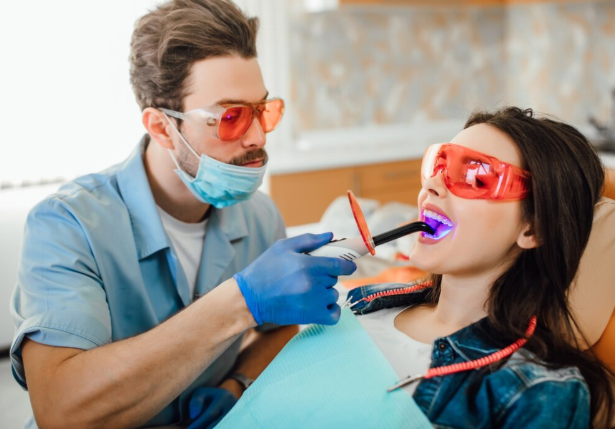
The procedure involves your dental professional applying a high-concentration whitening gel directly and carefully to the front surfaces of the teeth after the gums and surrounding soft tissue have been carefully protected with a barrier. In many in-surgery systems, a specialist light or laser is used to activate the whitening gel and accelerate the bleaching process. The gel is typically applied in multiple sessions within the same appointment, with each application working progressively to lift staining from the enamel.
The results of in-surgery whitening are immediately visible at the end of the appointment and can lift the tooth colour by several shades in a single session. This makes it the preferred option for patients who want the fastest possible result, those preparing for a significant event such as a wedding or important professional occasion, and those who prefer not to undergo a more extended home treatment protocol.
Home Whitening With Custom Trays
Professional home whitening involves the use of custom-fitted whitening trays fabricated by the dental practice to the precise dimensions of the patient’s teeth, combined with a professional-strength whitening gel supplied by the dental provider. The custom trays ensure that the gel makes consistent and even contact with every tooth surface throughout the treatment, which eliminates the patchy or uneven results that are common with non-custom over-the-counter trays.
The patient applies the prescribed amount of whitening gel to the custom trays and wears them for a specified period each day according to the dental provider’s instructions. This period varies depending on the concentration of the gel and the patient’s sensitivity levels, ranging from thirty minutes to a few hours per day. Results typically develop gradually over a period of one to two weeks, with the final shade comparable in quality to in-surgery whitening.
Home whitening with custom trays is a popular choice because it allows patients to whiten at their own convenience, provides a gradual and controlled result that many patients find more natural-looking than a rapid single-session change, and produces trays that can be reused for future top-up treatments with additional gel.
Combined In-Surgery and Home Whitening
Many dental practices offer a combined approach that begins with an in-surgery whitening session to achieve an immediate improvement, followed by a course of home whitening with custom trays to deepen and maintain the result over the following weeks. This combined approach is often considered the most comprehensive and results-focused option, particularly for patients with more significant staining or those who want to achieve the maximum possible degree of whitening.
Over-the-Counter Whitening vs Professional Whitening: A Clear Comparison
Many patients wonder whether professional whitening represents a significantly better option than the whitening products available in pharmacies and supermarkets. Here is a straightforward comparison of the two approaches.
Professional whitening treatments use considerably higher concentrations of bleaching agent than any legally available over-the-counter product in the United Kingdom. This higher concentration, applied precisely and safely under professional supervision, produces results that are dramatically more effective than what any pharmacy product can deliver. The custom trays used in professional home whitening ensure complete and even gel coverage that eliminates the patchy results common with generic strips and non-custom trays.
Over-the-counter whitening products are limited by UK regulations to very low concentrations of hydrogen peroxide, which significantly restricts their effectiveness. They are appropriate only as maintenance tools after professional whitening rather than as a meaningful standalone treatment. Whitening toothpastes use mild abrasives to remove surface staining but do not bleach the enamel and cannot produce the same degree of colour change as a peroxide-based professional treatment.
For patients who want a genuinely visible and lasting improvement in the brightness of their smile, professional whitening delivered by a qualified dental professional is the only approach that reliably achieves that outcome.
Signs That You May Benefit From Teeth Whitening
There are several clear indicators that professional teeth whitening could make a meaningful difference to the appearance of your smile.
- Your teeth have developed a yellow, grey, or brownish tone that has progressed gradually over time
- You consume coffee, tea, red wine, cola, or other staining beverages regularly and notice the impact on the colour of your teeth
- You have used tobacco products and notice the associated staining on the tooth surfaces
- Your teeth appeared noticeably brighter and whiter when you were younger and you want to restore that appearance
- You are preparing for a significant event and want to ensure your smile looks its very best
- You feel self-conscious about the colour of your teeth in photographs, social situations, or professional interactions
- Your teeth are structurally healthy and intact but the colour is affecting your confidence in your appearance
It is equally important to understand when whitening may not be the most appropriate treatment. Whitening agents work on natural tooth enamel and do not change the colour of existing dental restorations including crowns, veneers, bridges, or composite bonding. Patients with significant restorations in the visible front teeth should discuss this with their dental provider before whitening, as the natural teeth may lighten while the restorations remain their original shade.
Step-by-Step: What to Expect During a Professional Whitening Treatment
Understanding the whitening process from initial assessment to aftercare helps patients prepare for each stage and get the most effective result from their treatment.
Step 1: Pre-Whitening Dental Assessment Before any whitening treatment begins, a comprehensive assessment of the teeth and gums is conducted to confirm that the mouth is healthy enough for whitening to proceed safely. Any active decay, gum disease, or significant sensitivity must be addressed before whitening treatment begins. The assessment also includes a shade assessment using a standardized shade guide to document the starting colour of the teeth and establish a clear reference point for measuring improvement.
Step 2: Discussion of Options and Goal Setting Your dental provider will discuss the available whitening options with you, explain the realistic degree of improvement that is achievable for your specific type of staining, and recommend the approach that best suits your goals, timeline, and sensitivity levels. Patients with existing dental restorations in the visible teeth will be advised about the implications of whitening the natural teeth around those restorations.
Step 3: Preparation of the Treatment Area For in-surgery whitening, a protective barrier is carefully applied to the gums and surrounding soft tissue before the whitening gel is placed on the teeth. This step is critical in preventing the high-concentration whitening gel from coming into contact with the gum tissue, which could cause temporary irritation or discomfort.
Step 4: Application of the Whitening Gel The whitening gel is applied evenly across the front surfaces of the teeth. For in-surgery treatments, a specialist light or laser may be used to activate the gel and accelerate the bleaching reaction. The gel is typically applied in multiple stages within the appointment to progressively lift staining from the enamel. For home whitening, the patient applies the gel to the custom trays and wears them for the prescribed daily duration according to the provider’s specific instructions.
Step 5: Post-Treatment Shade Assessment and Aftercare Guidance At the completion of in-surgery treatment, a final shade assessment is conducted to document the improvement achieved and compare it against the pre-treatment shade. Detailed aftercare instructions are provided covering dietary restrictions, oral hygiene guidance, and sensitivity management for the days following treatment.
Step 6: Home Maintenance and Follow-Up For combined approaches or standalone home whitening, the patient follows the prescribed daily treatment protocol at home for the recommended duration. A follow-up appointment may be scheduled to assess the progress of home whitening and make any necessary adjustments to the protocol.
Safety Considerations for Teeth Whitening
Professional teeth whitening is a safe procedure when carried out by or under the supervision of a qualified dental professional using approved whitening products. There are several important safety considerations that patients should be aware of before beginning any whitening treatment.
In the United Kingdom, it is a legal requirement that teeth whitening containing or releasing more than 0.1 percent hydrogen peroxide can only be applied or supplied to patients by regulated dental professionals. Any provider offering teeth whitening who is not a registered dental professional is operating illegally and poses a significant risk of harm to patients. Always ensure that your whitening treatment is provided by a qualified and registered dental practitioner.
Patients with existing tooth sensitivity should inform their dental provider before whitening so that the treatment protocol can be adjusted accordingly, using lower-concentration gel, shorter application times, or desensitising treatments before and after whitening to manage sensitivity effectively. Whitening is not recommended during pregnancy. Patients with active gum disease, significant recession, or exposed root surfaces should address these conditions before whitening.
Prevention and Maintenance Tips to Protect Your Whitening Results
Maintaining the results of teeth whitening requires consistent attention to diet, oral hygiene, and periodic top-up treatments. Here are the most effective steps to keep your smile looking bright for as long as possible after professional whitening.
- Avoid coffee, tea, red wine, dark sodas, and other heavily pigmented foods and beverages for at least 48 hours after whitening, as the enamel pores opened during treatment are most susceptible to restaining during this window
- Use a straw when drinking beverages that could stain the teeth to minimize direct contact with the tooth surfaces
- Brush your teeth gently after meals to remove surface pigments before they have an opportunity to settle into the enamel
- Use a whitening toothpaste as part of your daily routine to help manage surface staining between professional treatments
- Attend your regular professional cleaning appointments every six months, as removing tartar and surface build-up keeps the teeth looking cleaner and supports the longevity of whitening results
- Avoid tobacco use entirely, as smoking is one of the most significant contributors to both surface and deep tooth staining
- Store your custom whitening trays safely and ask your dental provider for top-up gel when the original supply is exhausted to maintain your results over time
- Drink plenty of water throughout the day to rinse the tooth surfaces and support saliva production
Frequently Asked Questions
- How long do professional teeth whitening results last in Battersea? The longevity of professional whitening results varies between patients depending on their diet, oral hygiene habits, and lifestyle factors. Most patients enjoy their initial whitening results for between six months and two years before noticeable fading occurs. Patients who avoid heavily staining foods and beverages, maintain a consistent oral hygiene routine, attend regular professional cleanings, and use periodic top-up whitening with their custom trays tend to maintain their results at the brighter end of this range. Individual factors such as the natural porosity of the enamel and continued consumption of staining substances influence how quickly results fade for each patient.
- Is teeth whitening safe for everyone? Professional teeth whitening is safe for the majority of healthy adult patients when provided by a qualified dental professional following a thorough pre-treatment assessment. It is not recommended during pregnancy, for patients with active gum disease or significant sensitivity, or for patients whose visible teeth include a high proportion of crowns, veneers, or other restorations that will not respond to whitening. Patients with worn enamel, significant recession, or exposed root surfaces should discuss these factors with their dental provider before proceeding, as whitening in these situations requires a more careful and considered approach.
- Will teeth whitening work on crowns, veneers, or fillings? No, teeth whitening agents work exclusively on natural tooth enamel and do not alter the colour of dental restorations including crowns, veneers, ceramic bridges, or composite bonding. If you have visible restorations in your front teeth, whitening your natural teeth will create a colour difference between the treated enamel and the unchanged restorations. This is an important consideration to discuss with your dental provider before whitening, as they may suggest alternative or complementary cosmetic solutions to achieve a uniform result across all visible teeth.
- How many shades whiter can I expect my teeth to become? The degree of improvement achievable through professional whitening varies between patients and depends on the initial shade of the teeth, the type and severity of the staining, and the whitening method used. Professional in-surgery whitening typically produces a result several shades lighter than the starting colour in a single session. Home whitening with custom trays achieves a comparable final result over a longer treatment period. Your dental provider will use a shade guide during your pre-treatment assessment to give you a realistic expectation of the outcome based on your individual starting point, ensuring that your goals are aligned with what is clinically achievable.
- How soon after whitening can I eat and drink normally? The 48 hours immediately following a whitening treatment are the most important period for protecting your results. During this window, the enamel pores opened during the bleaching process have not yet fully closed, making the teeth most susceptible to restaining from pigmented foods and beverages. During this period, patients should stick to a white diet, avoiding coffee, tea, red wine, dark sauces, berries, and any other strongly coloured foods or drinks. After 48 hours, normal eating and drinking can resume, though continuing to moderate consumption of heavily staining substances will significantly extend the longevity of the whitening results over time.
Conclusion
The best teeth whitening options in Battersea are professional treatments provided by qualified dental practitioners, with in-surgery whitening, custom tray home whitening, and combined approaches, all offering reliable and clinically proven results that over-the-counter products cannot replicate in safety, effectiveness, or consistency. Choosing a qualified provider, following pre and post-treatment guidance carefully, and committing to ongoing maintenance are the three steps that deliver a brighter smile that lasts as long as possible. Battersea Dental Practice, located at 33A Queenstown Rd, London SW8 3RE, United Kingdom, is one of the most trusted dental clinics in Battersea, providing professional whitening treatments and comprehensive cosmetic dental care to patients who want to look and feel their very best. To book your whitening consultation, contact the team at batterseadentalpractice@gmail.com or call +44 20 7622 5322.